

 See My Latest Article on HelloNation
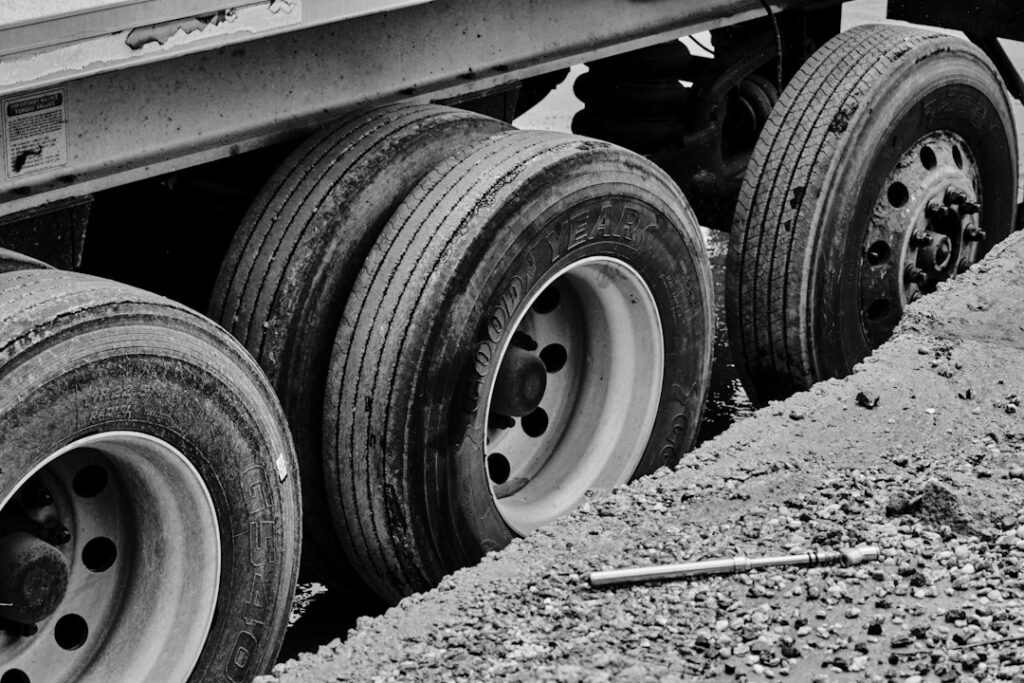
Commercial tire tread depth affects much more than appearance. It influences wet-road traction, braking, steering stability, heat control, fuel efficiency, and the tire’s ability to carry a working vehicle safely. For trucks, vans, buses, trailers, and other fleet vehicles, tread condition should be considered alongside inflation pressure, load, alignment, tire age, and the type of work the vehicle performs.
What does tread depth mean?
Tread depth is the distance from the top of the tread blocks down to the deepest grooves in the tire. It is commonly measured in thirty-seconds of an inch.
The grooves and channels in a commercial tire help move water, slush, gravel, and loose debris away from the contact area. The raised tread blocks provide the surfaces that grip the road during acceleration, braking, and cornering.
A new commercial tire may have substantially more tread than the minimum permitted for continued use. As the tread wears, the tire can remain visually intact while gradually losing performance, especially on wet or uneven pavement.
How does tread depth affect wet-road traction?
Deeper tread generally provides more ability to evacuate water from beneath the tire. This matters because a layer of water can reduce contact between rubber and pavement, increasing the risk of hydroplaning.
Reduced tread depth does not automatically make a tire unsafe in every condition, but it leaves less groove capacity for moving water. The effect is more noticeable during heavy rain, standing water, rapid travel, or sudden braking.
Rochester, NY drivers may encounter wet pavement during spring rain, summer storms, and periods of winter precipitation. Commercial vehicles often travel with heavier loads and longer stopping distances, so a loss of wet-weather traction can have greater consequences than it would in a lightly loaded passenger car.
Does deeper tread improve winter performance?
Tread depth is one part of winter performance, but it is not the only part. Deeper grooves can help a tire manage slush and loose snow, while the tread design determines how the tire grips and clears that material.
A tire with adequate remaining tread may still perform poorly in winter if:
- The rubber has hardened with age.
- The tire is underinflated or overinflated.
- The tread is worn unevenly.
- The tire design is not suited to the vehicle or route.
- The vehicle’s load is distributed improperly.
Snow and slush can fill shallow grooves more easily, reducing the tire’s ability to maintain a clean contact surface. On icy pavement, however, tread depth alone cannot create dependable traction. Speed, following distance, braking technique, and road conditions remain critical.
How does tread depth influence braking distance?
A commercial vehicle with worn tread may need more distance to stop, particularly on wet pavement. The tire must maintain enough grip for the braking system to transfer stopping force to the road.
Braking performance also depends on axle position, load distribution, brake condition, suspension components, road surface, and tire pressure. Tread depth should therefore be treated as one part of the braking system rather than an isolated measurement.
A heavily loaded delivery vehicle descending a wet roadway places much greater demands on its tires than an unloaded vehicle traveling on dry pavement. Even a modest loss of available traction can become noticeable during emergency braking.
Can low tread depth increase heat and tire stress?
Worn tread can reduce a tire’s ability to manage changing road conditions, but heat buildup is more directly associated with inflation, load, speed, construction, and operating conditions.
Underinflation is especially damaging because it increases sidewall flexing and internal heat. Overloading can create additional stress even when the tire appears to have sufficient tread. Extended highway travel, frequent stops, rough pavement, and heavy cargo can compound these effects.
A tire with acceptable tread depth should not be assumed to be healthy if it shows bulges, cracks, exposed cords, impact damage, or signs of overheating.
Why is uneven tread wear a warning sign?
Uneven wear often indicates that something besides normal tread loss needs attention. Common patterns include:
- Wear on both shoulders: May indicate underinflation or heavy loading.
- Wear in the center: May indicate overinflation.
- Wear on one side: May point to alignment or suspension problems.
- Cupping or scalloped wear: May be associated with worn suspension components, imbalance, or improper rotation.
- Rapid wear on one axle: May reflect load distribution, alignment, or operating conditions.
Unevenly worn tires can lose useful performance before the average tread depth appears low. Measuring several locations across the tread is more informative than checking one spot.
What is the difference between tread depth and tread condition?
Tread depth measures how much material remains. Tread condition describes whether the remaining tire is sound and evenly usable.
A commercial tire may have adequate depth but still require removal from service because of:
- Cuts that reach structural layers.
- Sidewall bulges or separations.
- Exposed cords.
- Deep weather cracking.
- Flat spots.
- Foreign objects causing air loss.
- Irregular wear that affects stability.
- Damage from curbs, potholes, or road debris.

Tread wear indicators molded into many tires provide a basic visual warning when the grooves have worn to a designated level. They are useful, but they do not replace a complete inspection.
How often should commercial tire tread be checked?
Tread should be checked regularly rather than only before long trips. A practical routine includes a visual inspection before daily operation and a more detailed measurement during scheduled maintenance.
Check for:
- Tread depth across the full width of each tire.
- Differences between tires on the same axle.
- Uneven wear or missing tread blocks.
- Damage between dual tires.
- Correct inflation pressure when tires are cold.
- Objects lodged in grooves or sidewalls.
Vehicles that operate on construction routes, unpaved surfaces, steep grades, or heavily salted winter roads may need more frequent inspections. Short trips do not eliminate risk; repeated curb impacts and low-speed maneuvering can still damage tires.
Is replacing one commercial tire enough?
Replacing only one tire may create an imbalance in tread depth or rolling diameter, depending on the axle and tire configuration. Differences can affect handling, drivetrain components, and wear patterns.
The correct replacement approach depends on whether the tire is mounted on a steer axle, drive axle, trailer axle, or dual-wheel setup. Matching size, construction, load rating, tread type, and overall condition is particularly important for vehicles that carry substantial cargo.
For safety and compliance, tire replacement decisions should account for the vehicle manufacturer’s specifications and applicable commercial vehicle rules. A tire that looks similar may not be an appropriate match for the axle or operating duty.
What should Rochester drivers remember during seasonal changes?
Seasonal temperature swings can change inflation pressure, while winter potholes and road debris can create damage that is not immediately visible. Wet spring pavement and slush place additional demands on tread grooves, and summer highway heat can expose problems involving underinflation or overloading.
Before a season of heavier travel, inspect tread depth, pressure, sidewalls, valve stems, and the inside surfaces of dual tires. Keep in mind that tread depth cannot compensate for incorrect pressure or excessive cargo weight.
The most useful question is not simply whether a tire still has tread. It is whether the remaining tread is even, undamaged, appropriate for the axle, and sufficient for the vehicle’s actual load and operating conditions.