

 See My Latest Article on HelloNation
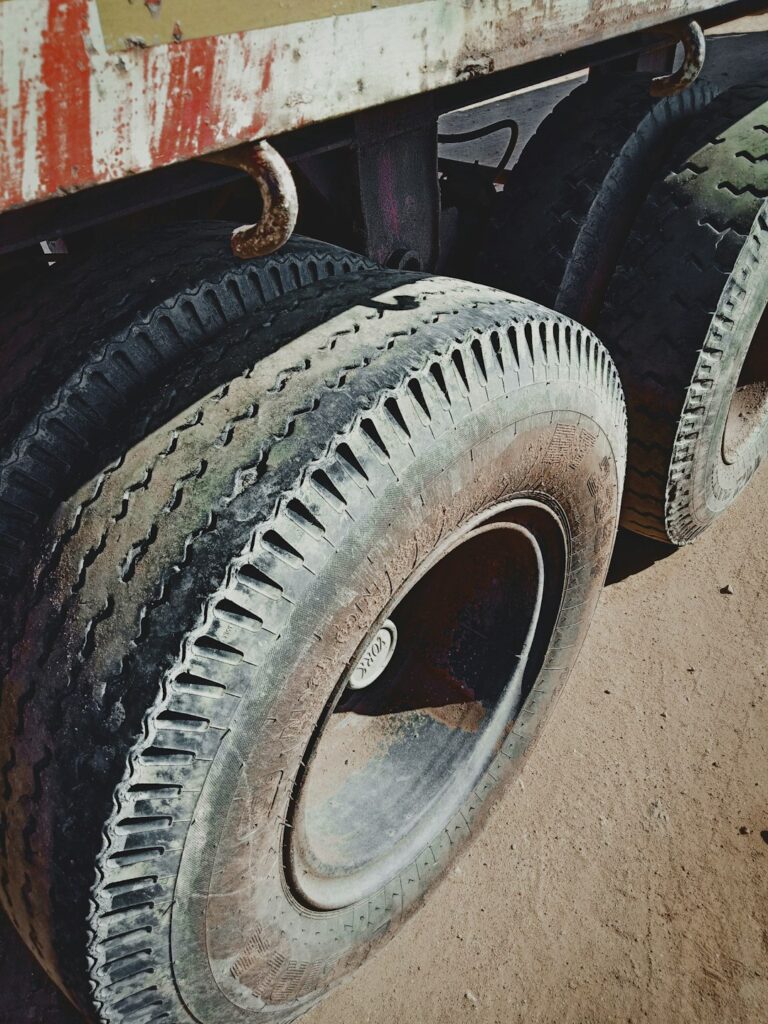
Commercial truck tire rotation is more than a routine maintenance task. Moving tires between approved wheel positions can help promote even wear, extend casing life, improve handling, and reveal alignment or suspension problems before they become serious.
For fleets and independent truck owners in Rochester, NY, rotation planning also needs to account for heavy winter use, freeze-thaw road conditions, frequent short trips, and changing loads. The correct method depends on the truck’s axle layout, tire type, tread design, drive configuration, and manufacturer guidance.
Why does commercial truck tire rotation matter?
Regular rotation helps distribute the forces that cause tires to wear differently across a truck. Steering tires may develop shoulder wear from turning and alignment problems, while drive tires can lose tread more quickly because they transmit engine power to the pavement. Trailer tires may experience irregular wear from scrubbing during tight turns or from uneven loading.
Balanced wear can provide several benefits:
- More predictable handling
- Better traction throughout the tire’s usable life
- Reduced vibration and irregular tread patterns
- Longer service life for compatible tires
- Earlier detection of alignment, suspension, or inflation problems
- More consistent braking performance
Rotation cannot correct a damaged tire, worn suspension component, bent wheel, or serious alignment defect. It is a maintenance practice that works best when combined with regular inspections and accurate inflation.
How often should commercial truck tires be rotated?
There is no single mileage interval that applies to every commercial truck. A practical starting point is to inspect tire wear at every scheduled service and consider rotation when wear differences become noticeable or according to the tire and vehicle manufacturers’ recommendations.
Many trucks are evaluated for rotation at intervals such as:
- Around 5,000 to 8,000 miles for vehicles with demanding stop-and-go use
- Around 8,000 to 12,000 miles for many highway applications
- At each scheduled preventive maintenance service when operating conditions are severe
These figures are general reference points, not universal rules. A truck making frequent deliveries, carrying heavy loads, or operating on rough pavement may need earlier attention than a vehicle traveling mostly on steady highway routes.
Time-based checks are especially useful during seasonal transitions. Before winter operation, tires should be checked for tread depth, inflation, damage, and uneven wear. After winter, another inspection can identify wear associated with potholes, road debris, and repeated temperature changes.
Can all commercial truck tires be rotated in the same pattern?
No. Rotation patterns must match the tire’s approved position and tread design.
A tire designed for a steer axle may not be approved for a drive or trailer position. Some tires are directional, meaning their tread must continue rotating in the specified direction. Others have asymmetric tread patterns that must remain oriented correctly. Mixing tires without checking their markings can reduce traction or create handling concerns.
The basic rule is simple: move a tire only to a position where its size, load rating, construction, tread design, and service designation are approved.
Common configurations include:
- Steer axle: Tires generally remain on the steer axle unless the manufacturer permits another position.
- Drive axle: Tires may be exchanged within the drive axle group when size and tread requirements match.
- Trailer axle: Tires may be rotated within compatible trailer positions, especially when wear is caused by turning forces.
- Dual-wheel positions: Matching diameter, construction, and tread condition are essential. Tires in a dual assembly should be properly paired.
A written tire-position map helps prevent mistakes. Each tire can be marked by axle and position before removal, then inspected and recorded after installation.
What rotation patterns are commonly used?
The appropriate pattern depends on the vehicle and tire manufacturer’s instructions. For many commercial trucks, rotation is more limited than on passenger vehicles because each axle has a defined job.
Possible approaches include:
- Moving tires side to side on the same axle when permitted
- Repositioning tires within a drive-axle group
- Moving trailer tires between compatible positions
- Replacing a worn tire rather than forcing it into another axle position
- Keeping directional tires on the same side unless they are remounted correctly
A tire should not be moved simply to “use up” remaining tread. A tire with shoulder damage, exposed cords, a significant irregular wear pattern, or a history of underinflation may be unsafe regardless of where it is installed.
What should be checked before rotating tires?
A rotation should begin with inspection, not removal. Each tire should be evaluated for condition and measured for wear across the tread.
Useful checks include:
- Tread depth at several points
- Inner, center, and outer shoulder wear
- Feathering, cupping, or scalloping
- Cuts, punctures, bulges, and sidewall damage
- Valve stem condition
- Wheel and fastener condition
- Inflation pressure using a reliable gauge
- Matching of tires in dual-wheel assemblies
- Evidence of rubbing against suspension or body components

Uneven wear often provides a diagnostic clue. Wear on both shoulders may indicate extended operation at low pressure. Center wear can suggest overinflation. Feathering may point toward alignment or toe-related problems. Cupping can be associated with worn shocks, loose components, imbalance, or other suspension issues.
Rotating tires without addressing the cause may only spread the problem to another position.
How does Rochester’s climate affect rotation planning?
Cold weather changes inflation pressure, while heavy summer loads and winter road conditions can accelerate wear. Tire pressure generally falls as air temperature drops, so a tire that appears properly inflated during mild weather may be underinflated during a colder morning.
Winter road treatments, potholes, and freeze-thaw cycles can also increase the likelihood of wheel damage, irregular wear, and alignment changes. Trucks that operate locally through winter should receive closer visual inspections after striking a pothole or curb, even if no immediate handling problem is noticed.
Pressure should be checked when tires are cold and adjusted to the vehicle or tire manufacturer’s specifications. Pressure should not be lowered to improve traction on public roads. Underinflation increases heat buildup, rolling resistance, shoulder wear, and the risk of casing damage.
What mistakes should be avoided?
Several common habits can reduce the value of tire rotation:
- Rotating tires without recording their original positions
- Ignoring different tread designs or service applications
- Pairing tires with substantially different diameters in dual positions
- Failing to check inflation after the tires are moved
- Treating a rotation as a substitute for alignment or suspension repair
- Using tread depth alone to judge tire condition
- Moving a damaged tire to a less visible axle
- Applying incorrect wheel torque during reinstallation
- Waiting until a tire is severely worn before inspecting it
Wheel installation requires the correct tools, procedures, and torque specifications. Loose or improperly tightened wheel fasteners create a serious safety hazard. If wheel damage, exposed cords, a bulge, rapid pressure loss, or uncertain tire compatibility is found, the vehicle should not continue operating until the condition is properly evaluated.
What records should be kept?
A simple tire service record can improve maintenance decisions. Record the vehicle identification, date, mileage, tire position, tread measurements, inflation readings, and any visible defects.
Tracking the same tire over time can show whether wear is improving after rotation or continuing because of a mechanical issue. Records also help identify repeated problems on a particular axle, route, trailer, or load pattern.
For commercial vehicles, consistent documentation is useful for preventive maintenance and safety inspections. It provides evidence that tire condition is being monitored rather than addressed only after a failure.
When is rotation not enough?
Rotation is not the right response to every wear problem. A truck should be removed from service or carefully evaluated if a tire has structural damage, a severe air leak, exposed cords, a major tread separation, or a sidewall bulge.
Likewise, repeated irregular wear may require attention to wheel alignment, suspension components, wheel balance, axle condition, loading practices, or tire selection. In those situations, moving the tires may temporarily change where the wear appears without correcting the underlying risk.
The safest rotation plan is therefore based on the truck’s actual operating conditions, approved tire positions, inspection results, and maintenance records—not on a fixed pattern used for every vehicle.